

unveiling the power of internal family systems therapy
(Note: In this article I reference Internal Family Systems Therapy, developed by Dr. Richard C. Schwarz. Through this method we may discover aspects of ourselves – called “Parts” – that make up the complexity of each of our psyches.
(Carefully using this well-honed technique–best learned and practiced with a qualified therapist–we delve deep to discover ways in which we might be sabotaging ourselves or holding ourselves back.
(Then, we befriend these “parts” and work with them to develop new roles in which these parts become resources rather than liabilities. IFS is not a treatment method for schizophrenia or DID.)
Have you ever felt shaky about changing careers?
I do. Every day.
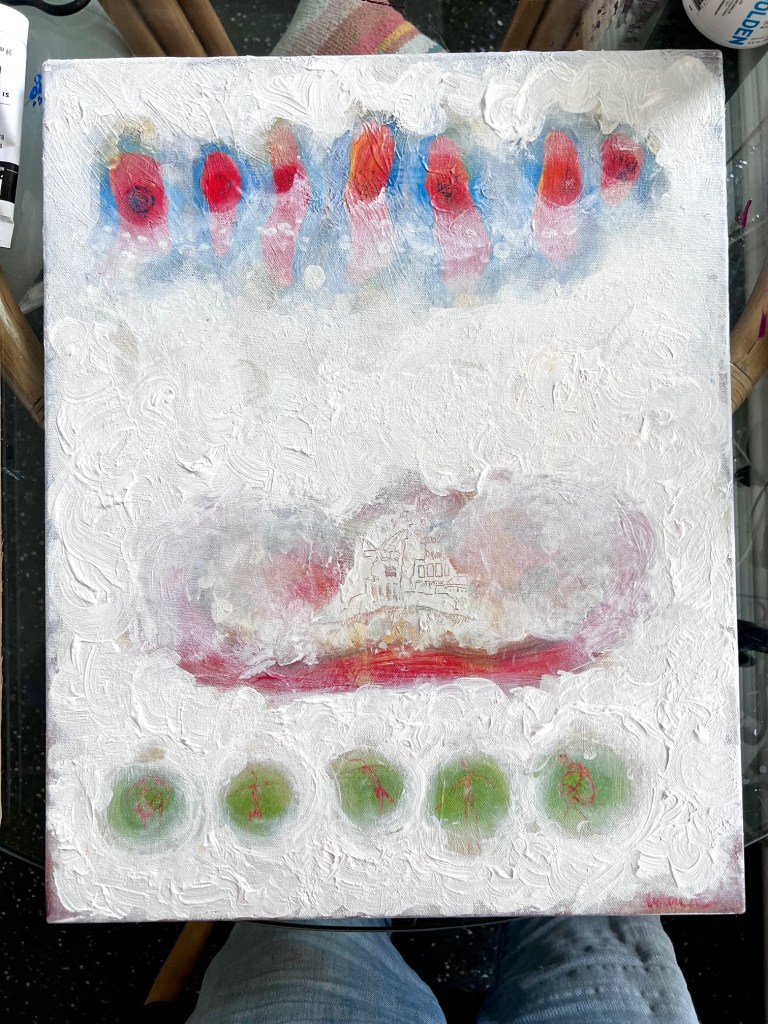
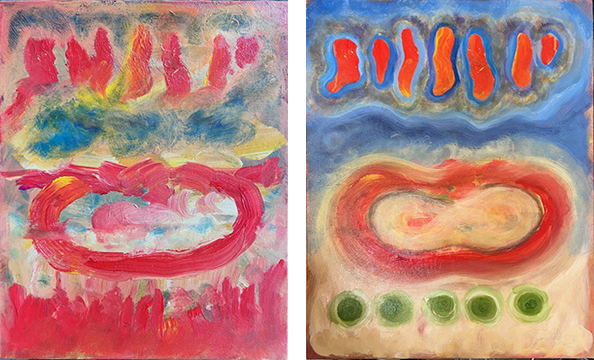
I completed a painting yesterday (BUT I still need to varnish it…).
You see? There it is, right there; that nagging self-doubt, the cancellation of self-worth, accomplished with a simple three-letter word: “BUT.”
Truthfully, I’m satisfied with it. BUT it’s not exactly how I envisioned it before I put paint to canvas. BUT, that’s okay.
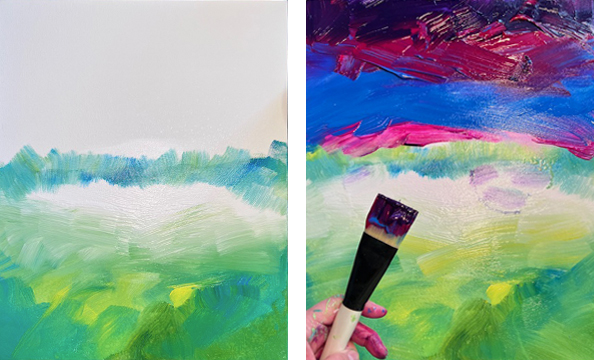
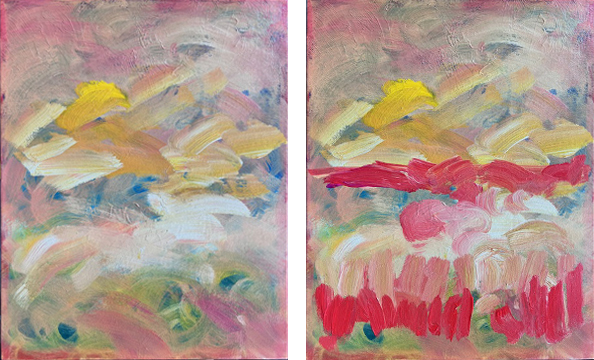
Some pretty fascinating layers and bending of colors lie beneath all that white paint. BUT I didn’t feel “right” about it until I killed my darlings and buried them under all of that white paint.
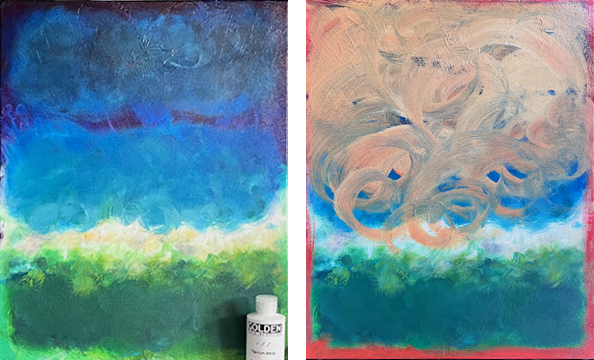
This happens with every piece of artwork I produce, and I’m learning to accept the inevitability of doubts arising. Does this sound familiar to you? I’m sure I’m not alone.
My acceptance dilutes doubt’s power and brings me closer to enjoying the process of fulfilling a lifelong dream.
I’ve wanted to be an artist since I was a child.
BUT I was raised by parents whose fear of poverty ran most of their parenting decisions and sent me to architecture school, with the subliminal message, “BUT, you’re not good enough to succeed in art.”
They assumed a “professional” career would ensure my financial security.
I didn’t consciously intend to prove them wrong, BUT the way things unwound (Autism, a special needs child, a divorce, a recession…), they might as well have sent me to art school. In the end, I came out no better off than their worst nightmare.
Those years of doubt dug plentiful holes in my confidence for the BUTs to take root and burrow deep.
In architecture school and afterwards I had opportunities to take art classes, and I received compliments and encouragement from teachers and professors. BUT my artistic pursuits never felt taken seriously.
Spending over forty years in a profession driven by certifications and licensing left its imprints on me, and one of those is the impression that without an MFA (plus maybe a PhD), I’ll never be a “real” artist.
Here’s where the hope lies: some of my distinguishing Autistic traits are perfectionism, the ability to draw and paint what I see (whether in life or my imagination), and dogged perseverance that nearly always pays off.
What I don’t know are the subtleties of professional artistic critique. No professorial advice echoes through my mind (that’s not from an Instagram reel); no overheard snide comments by other students; no wins or losses of awards and competitions; no words of wisdom about how to approach a gallery.
What rattles around in those deep holes of doubt are merely the ghosts of speculation founded in fear.
And I have no need for those.
A couple of months ago I received a hint from a dear friend who’s a medium. As we ended a session in which both of my parents had come through, Sue said, almost as an afterthought, “You might want to look into Internal Family Systems Therapy.”
That seemed odd, because now most of my family is dead. BUT I looked it up immediately, and discovered a powerful method for tapping into my “vibrant inner world” (which was a distinction that earned me my Autism diagnosis).
I had been working for some time already with gaming characters I’d created to express aspects of my personality that I’d sensed intuitively: the frightened little girl, the angry teenager, the tomboyish little girl who was just too much, and the slave-driver success-monger.
Learning about Exiles, Protectors, Managers, Firefighters, and the Self have helped me gain a clearer understanding of the forces at play in my inner world.
Beginning to uncover and work with them sheds powerful light on my doubts and strengths, and turns inner conflict and confusion into a creative process. I’m also finding that my “parts” inspire my artwork and help me understand my art and sketch journals from decades ago.
Right now, in this very moment, by writing this blog post, I’m dancing gently with the Exiled part of me that was told she’d never be a “real” artist.
I’m honoring her journey by acknowledging her, writing about her, and bringing her out of the shadows.
As I paint, we talk. Currently, she’s pushing a lot of BUTs out from those deep holes.
BUT she’s also noticing that the BUTs can’t survive amidst light, fresh air, and my dogged perseverance.
And we have a huge stash of art supplies to burn through on the way to extinguishing those BUTs.
If these discoveries resonate with you, I’d love to hear about your experiences with starting a new career, following your dreams, overcoming self-doubt, or Internal Family Systems. Thank you for reading!
(Personal note: I’ve been learning about IFS techniques through audiobooks, articles, and podcasts by Dr. Richard C. Schwarz, PhD. and Dr. Lissa Rankin, MD. I also work with my personal psychotherapist referencing these concepts and techniques, discussing my discoveries about my “Parts” — which Dr. Schwarz classify as Exiles, Managers, Protectors, and Firefighters (along with the Self). However, as an artist with a keen visual and tactile sensibility, I’ve made the most progress when working at home in a sketch journal that I use specifically for my IFS work. The IFS process is very personal, and I expect different people will have quite unique experiences with it. If you’re interested in trying it, I highly recommend starting with an IFS therapist. I’ve also found this free video to be incredibly helpful, and I use it as a guide in my journaling work.)


 leslee hare's blog